
 Introduction
In August 2026, a milestone breakthrough was achieved in hepatitis B treatment. Japan’s Ministry of Health, Labour and Welfare approved the launch of bepirovirsen (Hibsago), an antisense oligonucleotide drug developed by GlaxoSmithKline (GSK). As the world’s first innovative drug to achieve functional cure for hepatitis B, it has completely broken the traditional treatment paradigm of “lifelong medication and sustained disease control” for hepatitis B.

Don’t Miss It
Today, we will take you through a systematic overview of HBV infection models to advance scientific research and clinical understanding.

According to the WHO 2026 Hepatitis Report, there were 240 million people living with chronic hepatitis B worldwide in 2024, accounting for 2.9% of the global population. Around 1.1 million hepatitis B‑related deaths were recorded for the year, a 17% rise from 2015, indicating a growing mortality burden of the disease. At present, global treatment coverage is only 4.3%, and more than 95% of infected individuals have not received screening or standardized interventions, leaving enormous gaps in diagnosis and treatment.
China accounts for nearly 30% of the global hepatitis B patient population, with approximately 75 million existing chronic HBV‑infected individuals. Owing to widespread vaccination, new domestic infections in China have decreased significantly. However, the large cohort of existing patients remains a key challenge for clinical diagnosis, treatment and new‑drug R&D, and a substantial gap remains to achieve the WHO 2030 hepatitis elimination targets.
Core Pain Points of Incurability in Conventional Hepatitis B Therapy
Hepatic nuclear cccDNA constitutes the root cause for refractory hepatitis B.This viral minichromosome features high stability and a long half‑life and cannot be eliminated by available drugs, making viral rebound highly likely upon treatment discontinuation. Meanwhile, long‑term high antigen burden leads to exhaustion and immune tolerance of human immune cells, which fail to clear infected hepatocytes. In addition, HBV genes can integrate into the genome of human hepatocytes, continuously secreting surface antigens, exacerbating immunosuppression and forming a vicious cycle of chronic infection.
Constrained by multiple mechanisms, the functional cure rate of conventional nucleos(t)ide monotherapy has long remained below 1%, and the vast majority of patients require long‑term or even lifelong medication to maintain viral suppression.
Constrained by the difficulty in complete elimination of cccDNA, the medical community has defined functional cure (clinical cure) as the most feasible and clinically valuable core therapeutic goal at the current stage.
According to China’s Guidelines for the Prevention and Treatment of Chronic Hepatitis B, clinical cure is confirmed when patients achieve sustained hepatitis B surface antigen seroclearance and persistent HBV‑DNA negativity for more than six months after drug discontinuation. Without requiring complete elimination of cccDNA, this criterion enables patients to get rid of lifelong medication and substantially reduce risks of liver cirrhosis, liver failure and hepatocellular carcinoma, making it the optimal clinical endpoint at present.
As the world’s first approved drug for functional cure of hepatitis B, bepirovirsen breaks the therapeutic bottlenecks of conventional drugs via three innovative mechanisms. It precisely targets and degrades HBV mRNA, blocking viral replication and down‑regulating surface antigens at the source to relieve immunosuppression. Meanwhile, pre‑clinical studies have verified that it can activate human innate immune pathways, awaken endogenous antiviral capacity and eliminate infected hepatocytes.Achieving the therapeutic leap from “viral suppression” to “immune‑mediated clearance”.
The approval of this drug was based on the global multi‑center Phase III B‑Well trial program involving over 1,800 patients across 29 countries. Data showed that the functional cure rate reached 19% among patients receiving standardized NA therapy with HBsAg ≤ 3000 IU/mL; for favorable patients with HBsAg ≤ 1000 IU/mL, the cure rate rose to 26%, representing a leap forward compared with the less‑than‑1% cure rate of conventional therapies.
In terms of treatment modality, bepirovirsen eliminates the need for lifelong medication. Clinical cure post‑discontinuation can be achieved with a fixed 24‑week regimen of weekly subcutaneous injections. Marketing applications for this drug have been submitted to China, the United States and Europe. It has been granted Breakthrough Therapy designation and priority review status in China, and its domestic launch is highly anticipated.
At present, this drug is only indicated for specific patients previously treated with nucleos(t)ide analogues, and its therapeutic effect on treatment‑naive patients and patients with high antigen load still needs optimization. Industry consensus indicates that there is a ceiling for monotherapy‑mediated cure. In the future, combination and sequential therapies based on bepirovirsen will represent the core direction for hepatitis B cure‑oriented R&D.
Animal Models: The Cornerstone of Novel Hepatitis B Drug R&D
The success of bepirovirsen validates the critical value of pre‑clinical pharmacodynamic evaluation for the clinical translation of innovative drugs. The AAV‑HBV transduced mouse model from KCI·KMQ serves as a preferred mainstream model for early‑stage pharmacodynamic screening of hepatitis B at present. Featuring short overall model establishment cycles, high throughput and controllable costs, it can rapidly establish stable persistent HBV antigen expression, and is suitable for early‑stage in‑vivo pharmacodynamic evaluation of large batches of candidate compounds, innovative formulations and therapeutic vaccines.


 The KCI·KMQ hepatitis B animal model platform can flexibly match diverse mouse strains and detection protocols according to varying drug evaluation requirements:
·The AAV8‑1.3HBV chronic infection model is conventionally established in Balb/c mice. Continuous monitoring of serum HBsAg, HBeAg and HBV DNA, as well as terminal‑point hepatic HBcAg and liver histopathological changes, enables primary screening for antiviral activity and antigen‑reduction pharmacodynamics of small‑molecule and nucleic‑acid‑based drugs.
·For evaluating novel immunotherapeutic drugs, immune combination therapies and HBV therapeutic vaccines, the B6‑hPD‑1/PD‑L1 humanized immune‑checkpoint mice can be adopted. Combined with ELISpot‑based cellular immune function assay, this system can accurately assess the in‑vivo immunogenicity, specific T‑cell activation capacity and immunotherapeutic efficacy of test articles.
·This integrated model system meets early‑stage screening requirements for various innovative hepatitis B candidates, including small‑molecule drugs, ASO/siRNA nucleic‑acid drugs, immunomodulators and therapeutic vaccines. Characterized by high cost‑effectiveness and stable data, it is suitable for high‑throughput iterative development, and stands as the most practical and efficient pre‑clinical evaluation system for early‑phase R&D of novel hepatitis B drugs.


Case Study: HBV Infection Model & Pharmacodynamic Evaluation
①AAV8‑1.3HBV Mouse Infectious Model
Data Presentation
·Serum sample detection at different time‑points
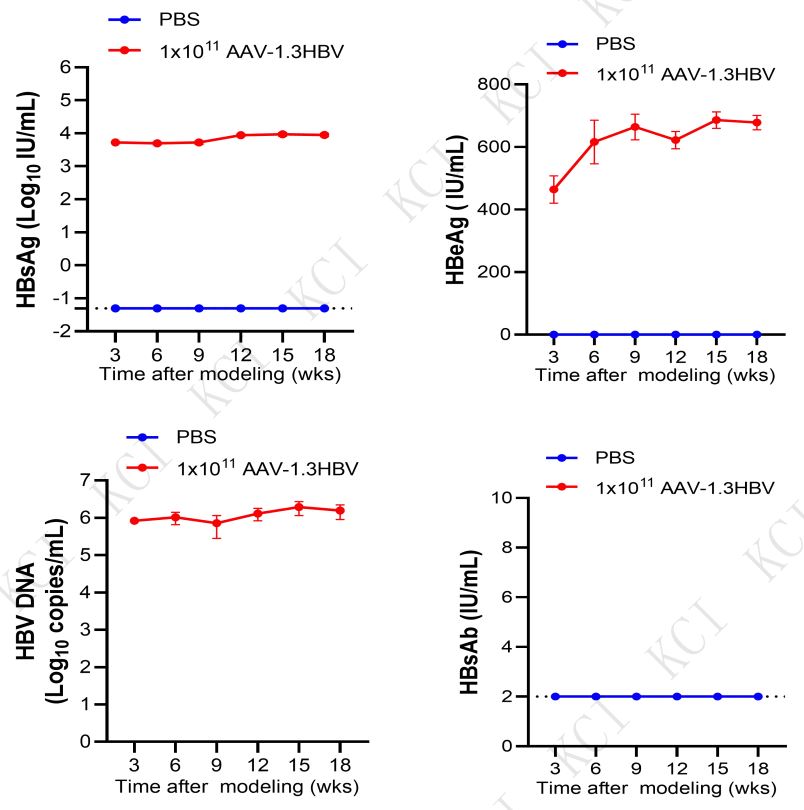
High titers of HBsAg, HBeAg and HBV‑DNA can be detected in peripheral blood 3 weeks after model establishment, while HBsAb remains below the lower limit of detection.
·Detection of hepatic HBcAg and HBV‑DNA levels
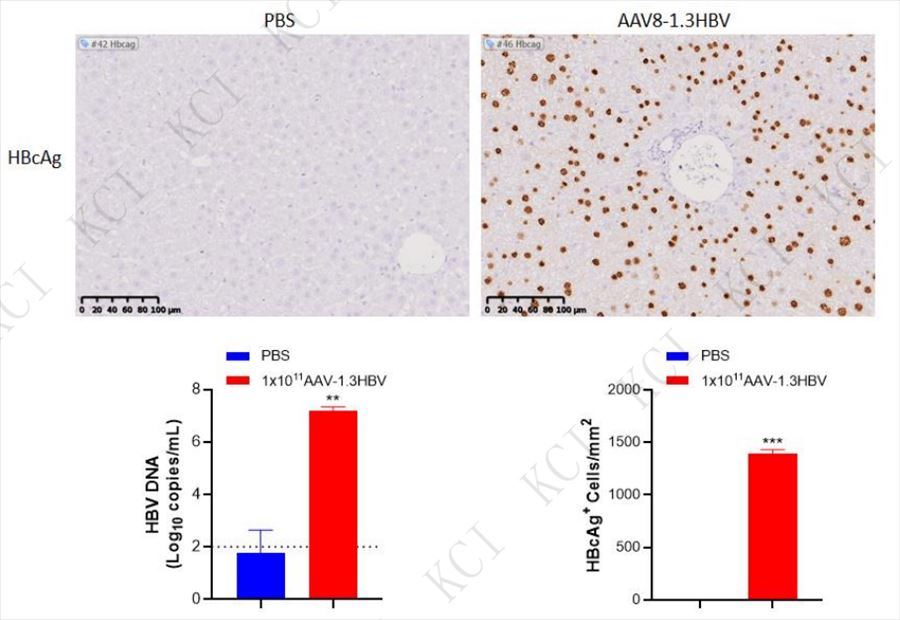
②Therapeutic effects of therapeutic agents in the AAV8‑1.3HBV mouse infection model
Data Presentation
·Serum HBsAg and HBsAb detection
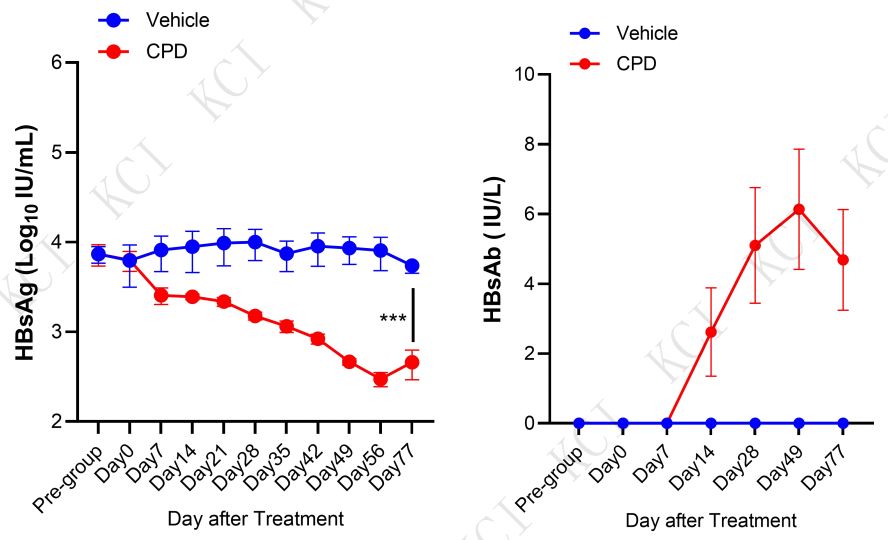
With prolonged administration of CPD, serum HBsAg levels gradually decrease with statistically significant differences compared with the model group. Meanwhile, HBsAb seroconversion begins after two‑week treatment, indicating notable improvement of in‑vivo immune tolerance status.
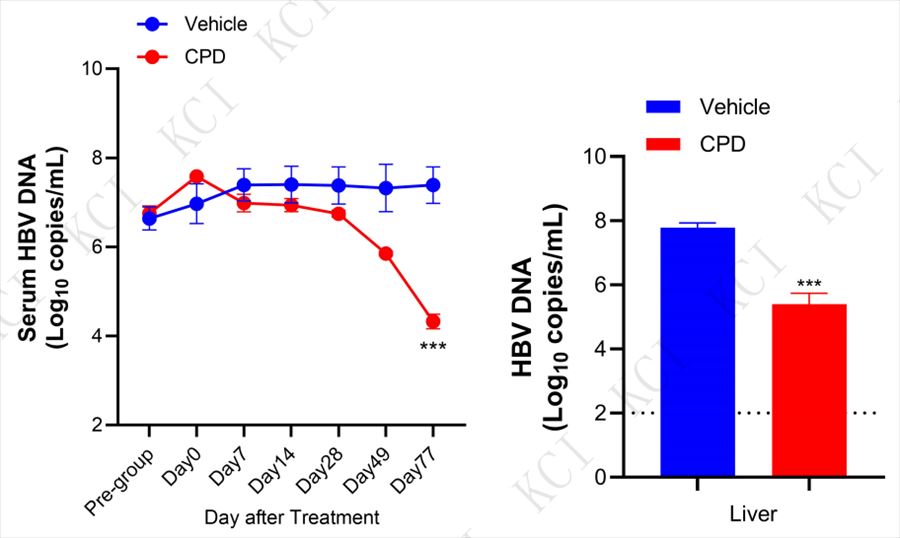
·Serum and hepatic HBV‑DNA detection
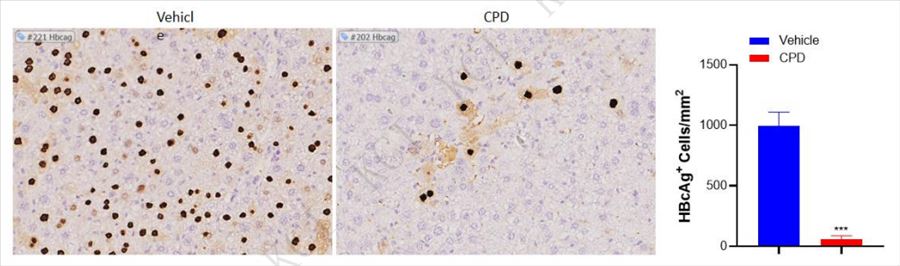
·IHC staining analysis of hepatic HBcAg
③Therapeutic effects of therapeutic vaccines in the AAV8‑1.3HBV mouse infection model
Data Presentation
·Serum HBsAg and HBsAb detection
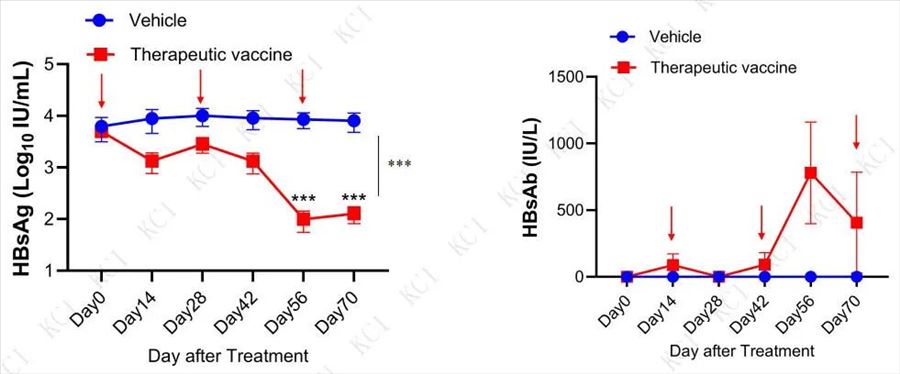
Two-way ANOVA: *p<0.05 vs. Vehicle group
After immunotherapy with HBV therapeutic vaccine, serum HBsAg levels show a downward trend. Partial animals exhibit HBsAb seroconversion after each immunization, demonstrating improved in‑vivo immune‑tolerance status.
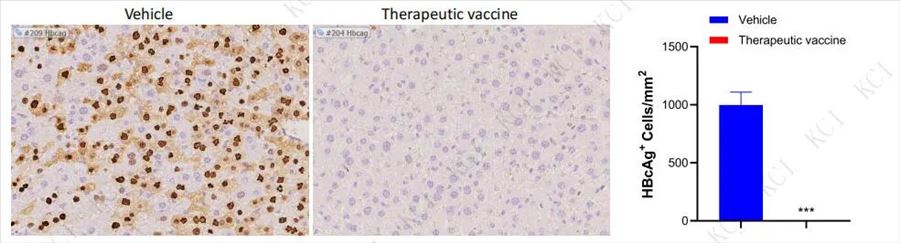
·IHC staining analysis of hepatic HBcAg
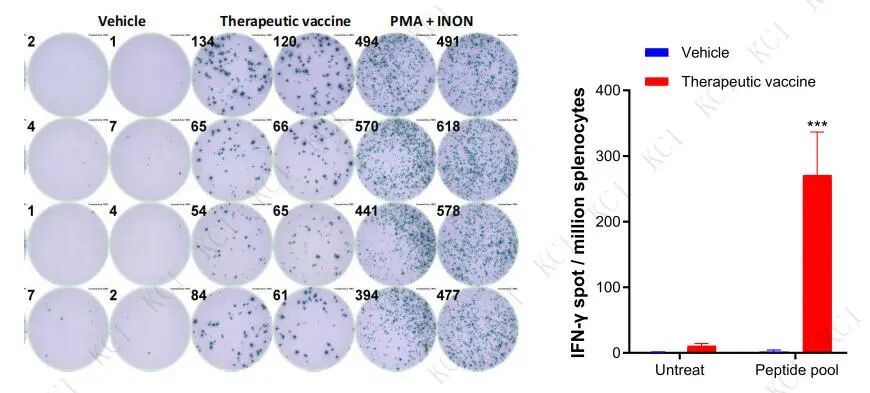
·Cell‑Mediated Immunity: ELISpot Assay
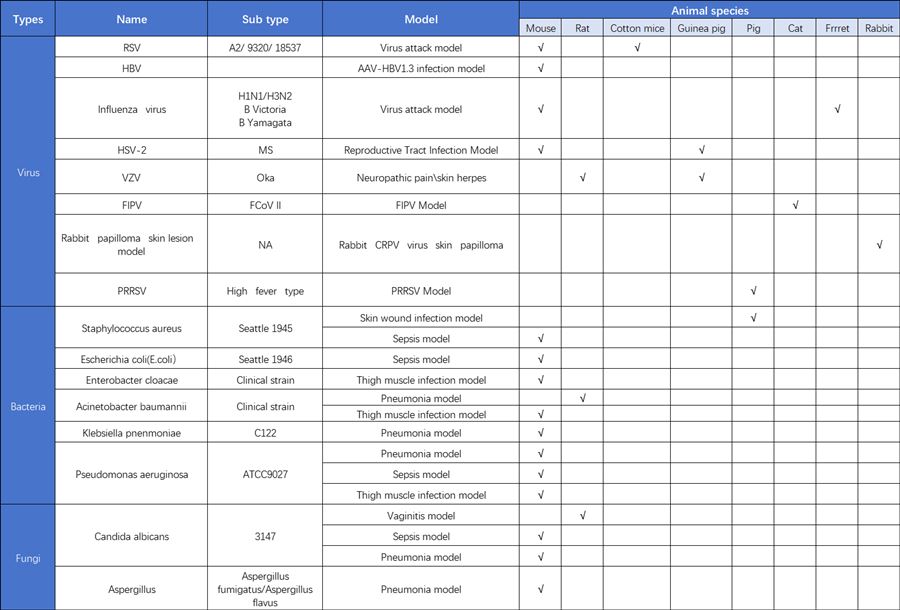
KCI・KMQ owns a platform qualified with both BSL‑2 and ABSL‑2 certifications, providing anti‑infective R&D services covering more than 100 pathogenic microorganisms (bacteria, viruses and fungi) for the development of human pharmaceuticals, veterinary drugs and pet medicines. The BSL‑2 laboratory occupies approximately 200 m², equipped for cell, virus and bacterial studies. The ABSL‑2 laboratory covers around 1000 m², including 300 m² small‑animal laboratory area and 700 m² large‑animal laboratory area.

After years of in‑house R&D and commercial service delivery, KCI・KMQ has successfully established a variety of animal models for viral, bacterial and fungal infections. We are committed to delivering high‑quality pharmacology and pharmacodynamic evaluation services for clients, mainly including:
·· In‑vitro anti‑infective pharmacodynamic tests:Antiviral activity‑EC₅₀/CC₅₀ determination; MIC drug susceptibility test; FIC index measurement; biological characteristic assessment, etc.
·In‑vivo vaccine immunogenicity tests:neutralization assay, hemagglutination‑inhibition assay, cell‑mediated immunity, etc.;
·Animal challenge protection tests:for vaccines and antiviral agents;
·Infectious animal studies.
Against the backdrop of the heavy global hepatitis burden and the launch of the first‑in‑class functional‑curative agents, hepatitis B therapy has officially entered a new era featuring limited‑duration treatment aiming for cure. Breakthroughs in innovative drug development rely heavily on robust pre‑clinical technical support. Leveraging its well‑established hepatitis B animal model platform, KCI・KMQ delivers efficient and precise pharmacodynamic evaluation services for pharmaceutical enterprises, accelerating the R&D of novel HBV therapeutics, mitigating clinical translation risks, and facilitating the launch of more curative drugs to benefit hepatitis B patients worldwide.
Should you require the detailed experimental protocols for the models, please leave a comment, and we will respond to you at the earliest opportunity~